

"We Don't Look at the After": Rick Jones's Football Nevers for Fourth Down, Two-Point Tries and Timeouts
Rick Jones, special assistant to the head coach at Missouri, keeps a list he calls his football nevers. Never punt on fourth and 1. Never kick a field goal from the plus 1. Never punt the ball down two scores late. Never spike the ball unless you are going to run out of time. Some of the entries will sound familiar and a couple will sound wrong the first time you hear them. One of the ideas behind the list comes through when Jones talks about fourth and 1: coaches have to account for what happens after the decision, not just grade the play itself.
"What we don't look at is we don't look at what happens after."
Take fourth and 1 on the opponent's end of the field. If Jones goes for it and doesn't get it, the other team has the ball deep in its own territory. "You've got to go 99. Now, how many of you are going to go 99?" Jones says the math is strong enough that fourth and 1 is worth going for even if it is the last play of the half. He attaches one condition: "It's not necessarily worth it if you stink on fourth and 1. You need to have a good fourth-and-1 offense."
Jones applies the same field-position argument at the plus 1. If you fail on fourth down there, the opponent still has to take possession backed up against its own goal line.
Down two scores, Jones says don't punt
The first never on his list is the one you see broken most often on television. Never punt the ball down two scores late in the third quarter or in the fourth quarter. Jones says teams that do it lose 94 percent of the time.
He knows what the alternative looks like from the couch. A team goes for it on fourth and 12, and "it just looks like the most idiotic decision in the world." But that team is down two scores. If it punts, it loses 94 percent of the time. "So they don't have a whole lot to lose in that situation."
Going for two with time on the clock
Never go for two for the win with more than a minute remaining. That is what Jones says the book calls for at the Division I level: kick the ball.
Jones wants more information in the decision than the conversion itself. How much time is on the clock? Can your defense stop them in a two-minute situation? Are you the better team, and better served by creating more snaps? If the opponent has too much time to respond and all it takes is a field goal to beat you, his answer is to go to overtime.
He has the game to prove the point. Five years ago, an opponent went for the win against his team with about 38 seconds left and converted. Jones's team was down one with two timeouts and, in his words, a tremendous kicker. "We throw three balls and kick a 55-yard field goal to beat them by two." He does not claim overtime would have gone his way. "They may or may not have been better in overtime, but that's some of the things that you have to consider."
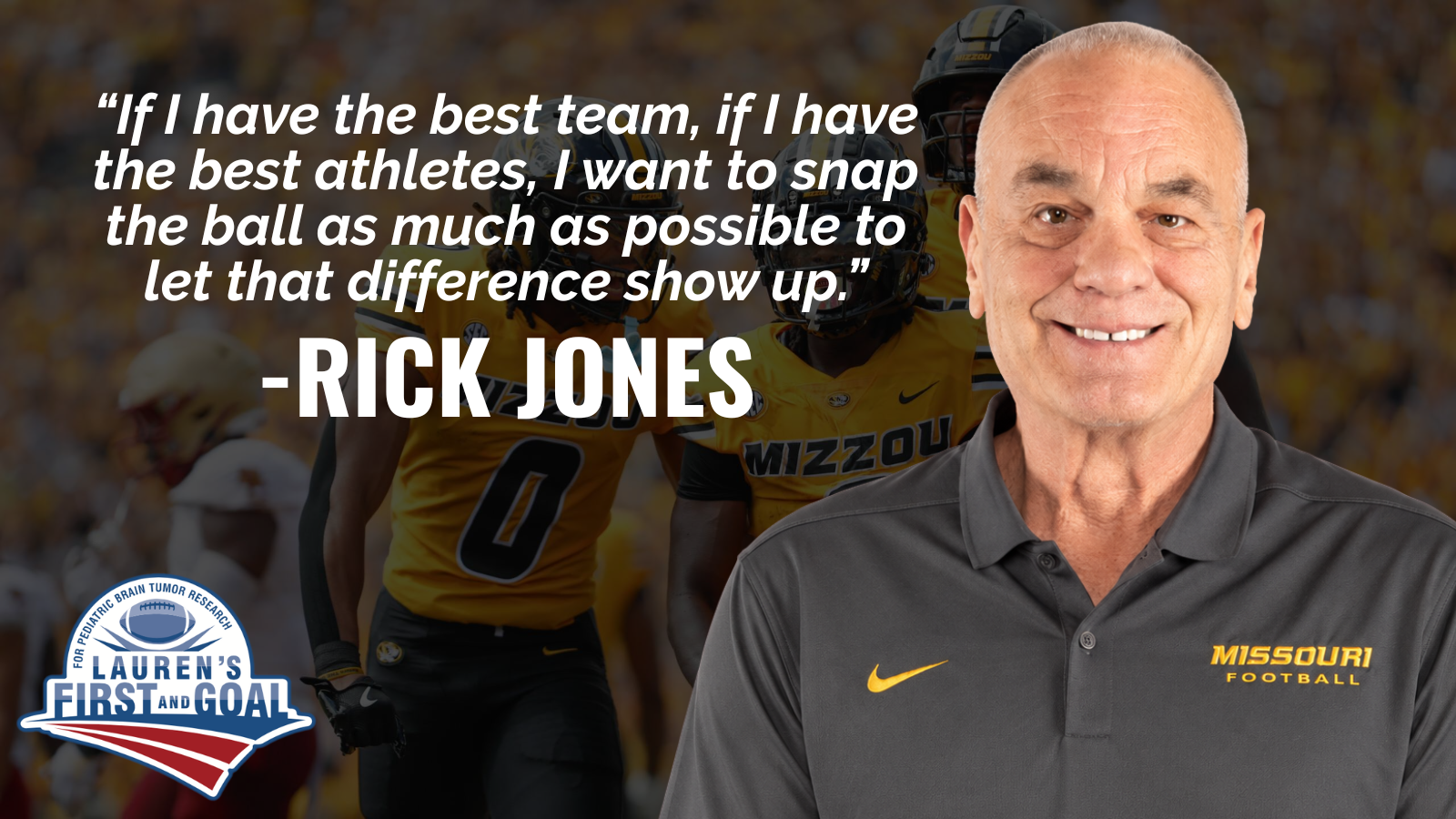
The roster question cuts both ways. A huge underdog might be right to try to end the game on one play. Jones's own preference runs the other direction when he has the personnel. "If I have the best team, if I have the best athletes, I want to snap the ball as much as possible to let that difference show up." Trying to win in one play, or in three or four, is a choice about how many snaps you want your advantage to have.
Timeouts are for saving the full 40
Never use a timeout on defense if you can't save the full 40 seconds. Jones calls timeout usage "amazingly important in those games that just come down to the last play," and the rule is about spending each one where it buys the most clock.
The companion never is about spiking. Never spike the ball unless you are going to run out of time before you can get the snap off. A spike costs about seven seconds, and Jones sees the mistake every weekend. "People spiking when they should use timeout. They end up with more plays and they end up with less time and timeouts in the pocket." His word for it is judicious.
The eight-second timeout
One never on the list is about a timeout you have to remember to take: never fail to take an offensive timeout at the eight-second mark in positive territory at the end of the half.
The scenario Jones lays out is fourth down at midfield with the clock winding down. When it reaches eight seconds, take the timeout. Eight seconds is long enough to throw a pass past the sticks to a receiver who has been trained to take a knee, run up and spike the ball, and still have time to kick the field goal on the last play of the half, or throw the Hail Mary if that is the better option.
If the fourth-down throw fails, the opponent has the ball in the middle of the field with almost nothing on the clock. "At best, they have a Hail Mary." Jones's figure: four of 153 Hail Marys have been completed in the last four years.
Punting from the plus 35
Never take an intentional penalty to punt the ball from the plus 35 or plus 39. The closer you are, Jones says, the better chance you have of downing the punt in the field of play instead of in the end zone. Backing up to create punting room sends the ball to the end zone more often, and that is the outcome the penalty was supposed to fix.
Jones applies the opposite logic when the opponent is facing fourth and 1. If they flinch or take a delay of game, accept it. "You don't want to decline the penalty. Take it. You want to be fourth and 6," because a team facing fourth and 1 can change its mind and go for it, and a team facing fourth and 6 punts. "You want the opponent to punt."
Two more from the list, stated without elaboration: never kick off deep when kicking from the 50, and never punt on fourth and 1. He allows himself an "almost" on the last one.
The book was written for a different level
Jones is direct about where these rules come from. The most efficient offenses in the world are in the NFL. Division I is second. High school offenses are not as efficient as college or the NFL, "and especially in two-minute situations." The two-point rule he cites is the book for Division I, and he says a high school coach has to weigh how much time is on the clock against how efficient his own offense and the opponent's really are.
The timeout rule has a level-specific number in it too. Jones says his defensive timeout rule is written to hold until about 2:30, and that number exists because of the two-minute warning, which high schools don't have.
So the nevers travel, but the numbers behind them may not, and Jones's suggestion is to build your own. Take your play-by-plays for every game this season and get the information. He says Hudl makes that fairly easy now.
He closed the segment by starting a second list, three assumptions that might be wrong, and gave the first one before the tape ran out.
"According to the announcers, every field goal will be made."
Want to Access Rick Jones’s Full Presentation?
Go deeper into Rick Jones’s approach to using analytics to make better game-day decisions, including fourth down, two-point decisions, clock management, field position, and situational football.