Blitzing From Two High: How Jacob Craig's Four Loco Coverage Gave St. Francis a Pressure Answer Offenses Couldn't Predict
A pressure team eventually runs into a problem of its own making. The more you blitz from the same picture, the more the picture becomes a tell, and the coverage you show before the snap starts telling the quarterback how many rushers are coming.
Jacob Craig, defensive coordinator and safeties coach at St. Francis University in Loretto, Pennsylvania, laid out that problem with his own numbers when he presented at the Lauren's First and Goal Clinic. The presentation aired on the Lauren's First and Goal Game Planning Tips podcast on the Coach and Coordinator Network.
In 2024, his first season at St. Francis, the defense pressured 46% of the time. This past season the number jumped to 64%. When St. Francis sends pressure, it primarily plays fire zone, the three-under, three-deep coverage most coaches know. Craig said that if you look at all of the pressures from a year ago, 99% of them were fire zone or one-peel pressure.
"So, they're all one high."
That is the sentence the rest of the presentation is built to answer. St. Francis is in a transition, having played an FCS schedule last year while moving to Division III to join the PAC, and Craig is building a defense that wants to keep its aggressive identity without letting a two-high shell become a promise that only four are coming. Four Loco became one of the answers Craig added.
What Four Loco is
Four Loco is a two-underneath, four-deep pressure coverage. The two underneath defenders are what St. Francis calls hot hook players. The four deep defenders are quarters players, split into inside quarters and outside quarters. The structure does not change with the formation. "It doesn't matter two by two, three by one. We're going to have that same structure. We're going to have that four deep, and then those two underneath defenders."
The hot hook, by Craig's definition, is a wall-two player responsible for number three fast, playing off the quarterback's eyes. If he is rotating down into that role, he makes a Roy or Lu call so the other hot hook defender knows which side he is playing from.
St. Francis ran Four Loco 94 times this past season on just under 710 defensive snaps, which Craig put at roughly two every 15 snaps. Within the pressure package, it accounted for 21% of their pressures. It was the first year of the coverage, and Craig said the usage "will continue to grow."
The two-high shell that can still blitz
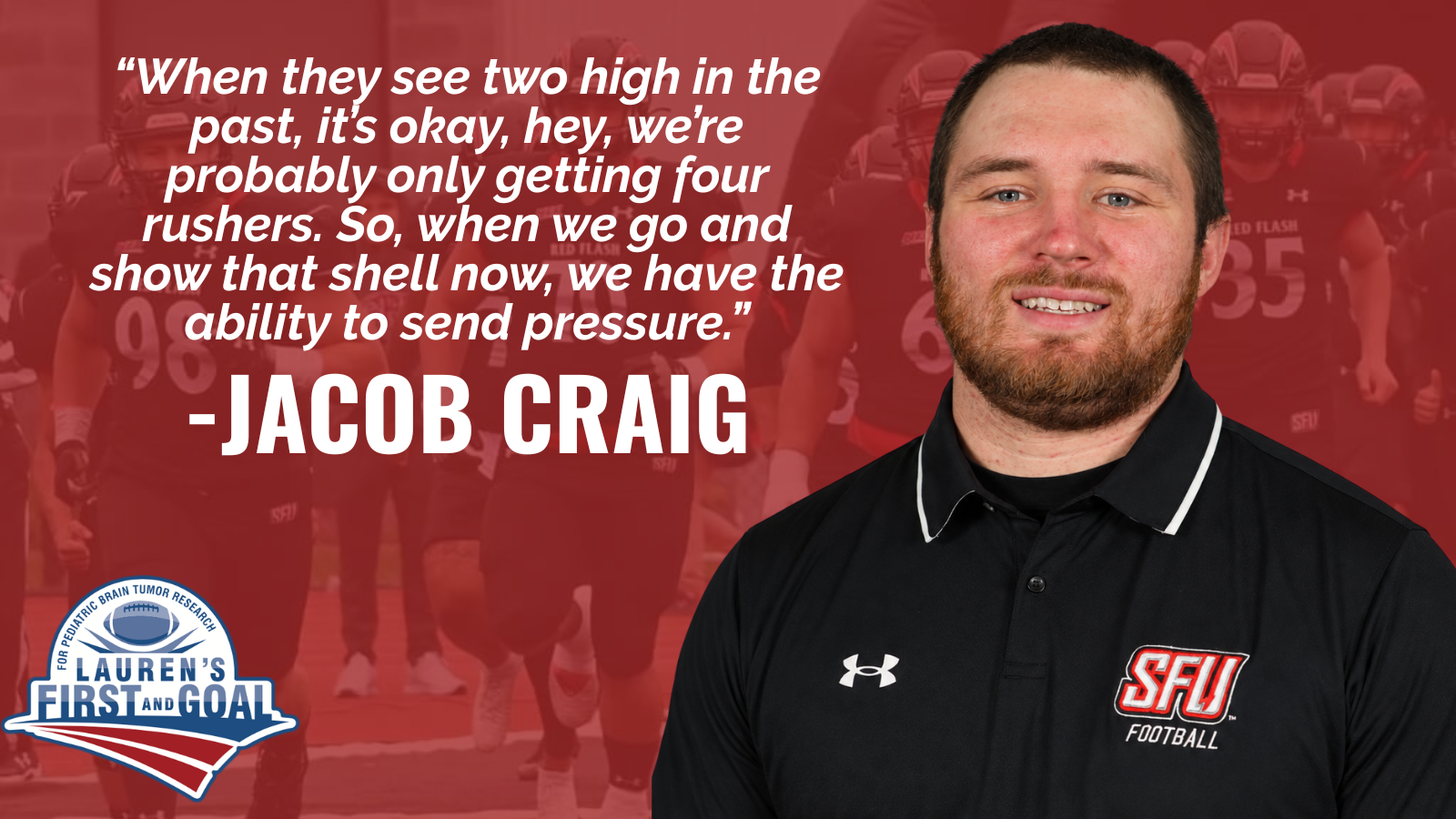
The first reason for Four Loco is simple and it is about the quarterback's presnap read. When St. Francis showed a two-high shell in the past, the offense could reasonably conclude it was getting a four-man rush. "Instead of when they see two high in the past, it's okay, hey, we're probably only getting four rushers. So, when we go, all right, and show that shell now, we have the ability to send pressure."
Craig's framing is worth sitting with, because he is not describing a new blitz. He is describing what the shell means. A defense that only pressures from one high has, in effect, told the offense which of its pictures are safe. Four Loco takes the safe picture off the board.
Fixing a fire zone problem the offense had found
The second reason is more specific, and it comes from a clip Craig chose from the 2024 season.
St. Francis has rules in its fire zones based on where number three is located that determine whether a defender plays inside or outside leverage. In the clip, number three is to the field and the nickel has outside leverage. With motion away, the nickel knows he should get back inside. He does, but late.
"It's second and nine, doesn't seem like a big deal. We're getting ready to get pressure, all right, but now we don't. We lost our inside leverage because we moved too late, all right, now it's just an easy pitch and catch."
On the tight view, Craig pointed out how close the blitz came to getting home. Number 98 is coming free. "I feel pretty confident if we have inside leverage here, he's got to go to his next read, all right, and 98 here is coming free, he's going to get a hit on this quarterback."
The offense had found something. By moving number three, it could stress a leverage rule, and if the defense did not process it fast enough, the throw was there before the pressure arrived. One way to read the clip is that the fix was never going to be a faster nickel. It was a structure that put a defender inside from the start.
"By going to this Four Loco, we can put a defender inside, wall this off, and this throw out is a lot harder than this throw across the middle of the field, just in front of the quarterback."
What the hot hook player gets in that spot is something the fire zone defender did not have: help. "He knows he's got help over the top, he knows he has help outside, all right, so now it's going to give us that extra split second that we need, all right, to get pressure on the quarterback."
That is the connection between the two reasons. The shell changes what the quarterback expects, and the inside wall buys the rusher time. The answer was not simply another pressure. It was a coverage that could help the existing pressure arrive.
A coverage that changes shape
Craig's other reason for liking Four Loco is that it does not stay two-under, four-deep. "It can easily turn into three under, three deep, or it can turn into four under, two deep based on the route distribution. So, we really like the multiplicity that it allows us to do."
That is part of why the checks matter. St. Francis installs three on day one: read, screw, and swipe. For a check like read, Craig described three primary assignments, the hot hook, the inside quarters player, and the outside quarters player, each with a key and a rule for what happens when that key does something: two out, one or two under, three fast. The players draw the picture as well as write the rule. Craig noted that a coach can build beyond those three checks based on what he already plays in quarters.
How St. Francis installs it
Craig walked through the install in the order his players get it. Assignments come first, then the checks, then a walk-through. From there the position groups go to individual drills tied to the techniques the coverage requires, then route recognition where the defensive backs and linebackers run the routes themselves, then seven-on-seven and skelly against the offense so they see it when they know it is a pass, and finally a live team session.
The install sheet the players get is not a finished document. Craig wants them to write it. "I don't want to give them the install and say, all right, here you go, learn it, because if you give them that piece of paper, they're going to look at it one time, and they're moving on." His reasoning is that writing it down means learning it more than once. "They're hearing it, they're processing it to write it down, and then they're making sure that they took their notes accordingly."
For each technique, the notes cover the same items. For the hot hook: the definition, any communication, the alignment, the key, the run fit responsibility, and the pass responsibility under each check. The same format repeats for inside quarters and outside quarters, and then again for each coverage check.
The question this raises for a pressure defense
Craig's numbers make the point without any help. A defense that pressured 64% of the time and did 99% of it from one high had an identity, and it also had a pattern. Four Loco was a way to keep the identity and break the pattern, and in its first year it gave St. Francis a second pressure picture at a rate Craig put at about two every 15 snaps.
For a coach who blitzes a lot, the question Craig's presentation suggests is not whether you have enough pressures. It is whether your shells still mean anything. If the offense can look at your safeties and know your rush count, you have a tell, and the fix may be a coverage rather than another blitz.
Want to Access Jacob Craig’s Full Presentation?
Go deeper into Jacob Craig’s Four Loco pressure coverage, two-high pressure structure, hot hook technique, and coverage checks with his full Lauren’s First and Goal Clinic presentation.