Motion With Purpose: Dayne Keller on When and Where Motion Pays Off
Dayne Keller opened this segment of his LFG Clinic 2026 talk with a question that sounds like it has an obvious answer: who should use motion? His answer was everybody, from the top down. He showed Ben Johnson and Sean McVay clips of the Bears and Rams using motion to create advantages. He uses it at Georgetown College, where he coaches receivers. He has used it at the high school level at multiple stops, where he said it can be implemented with a program's core concepts. He even made the case for youth football. Force a young defense to communicate and process movement before the snap, with things flying in front of them, and you take some of the easy looks away from them and give your quarterback a clearer picture. "You're just creating clarity, right?"
Keller does not treat every motion as if it has the same job. The purpose changes depending on the situation and where the offense is on the field. Early in the game it is asking a question. On third down it is a protection check. In the red zone it is a leverage device. After an explosive play it is a way to hit a defense that is still gathering itself. Each situation gets its own reason, and he was specific about all of them.
Early in the game, motion is a question
Keller believes in gaining information early: early in the game, early in a series, early in the second half. Motion is how he gets it. When a defense has to respond to movement, he said you learn three things. One, how they game planned you, or what they think your tendencies are. Two, how they are adjusting to you as the game goes on. Three, what their mode is, what their go-to is for that drive, that series, or that situation.
On early downs, that means diagnosing the coverage, confirming the shells, and setting up series tendencies. He called that a huge benefit for offenses that do it correctly. The information from that motion carries into the rest of the series: what coverage they are playing, how they are adjusting, and what their go-to answer appears to be.
On pressure downs, it is a protection check
Third down and obvious blitz situations get a different assignment. Motion there is about identifying the extra rushers before the snap. Once you see them, you can adjust the protection to what is actually being presented, and you can clarify the hot answers, whether that lives in how the quarterback reads it or how the front protects it.
Don't stop motioning in the red zone
Keller was direct that the red zone is not where motion goes away. It is where you manufacture leverage with it. If rubs are your go-to, motion creates the rub opportunities. If you are a triple option or jet sweep team, motion lets you manipulate edge fits. His point was that the red zone is full of areas where motion can gain an advantage, and he sees those leverage and fit advantages as ways to create better scoring opportunities.
After an explosive, steal another one
Keller called the period right after an explosive play crucial. Defenses are unsettled. Communication is stressed and bust potential goes up. His question was simple: why not steal an explosive after an explosive? Why not steal points while the defense is not a hundred percent sure what just happened or what is about to happen?
He described what that looks like on the field. The defense's communication about its own structure gets shaky. Sometimes they overplay the next snap, trying to overcompensate for what just hit them. When that happens, seams and gaps open in the run game, and fits get misconstrued between the DBs and the nickels, which creates opportunities in the RPO world or for taking another shot down the field. Motion into that moment is a way of pressing the advantage before the defense settles.
When you are in a rut, don't change who you are
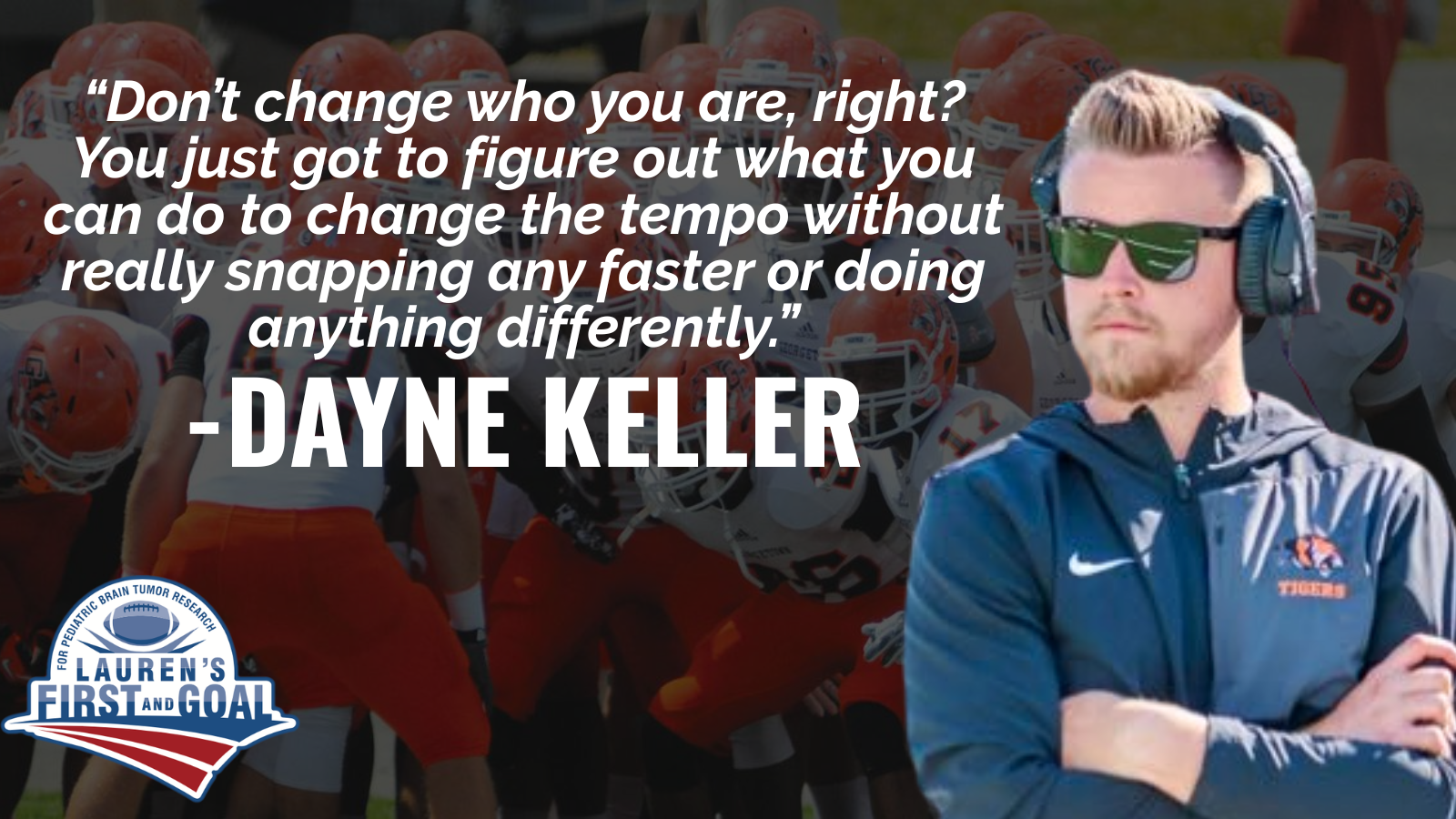
Keller also addressed what to do when the offense is in a rut, not moving the ball effectively and not being efficient. His rule is to get out of it without changing who you are. "Don't change who you are, right? You just got to figure out what you can do to change the tempo without really snapping any faster or doing anything differently."
Motion is how he does that. If you want an extra hat in the block scheme, motion one in. Motion them in, motion them out. If you want to create leverage for an isolation on your best receiver, motion guys in and out of certain formations and sets. The plays stay the same. The pictures change.
Where on the field, and why
Keller then walked through the same idea by field zone, because in his view the reason for using motion should change as the field shrinks or opens up.
Backed up. The goal is to reduce risk. Confirm the protection, identify when pressure is coming, and improve blocking angles. The whole question is how to get the ball moving forward to the next zone and back into the open field, where the menu opens up. His examples came from run-heavy structures: use motion to get split zone blocks going backside, use return motion or yo-yo motion back into it, or shift from an 11 personnel look to a 12 personnel look, or the other way around.
Open field. Now you are trying to create explosives. Stress the width of the defense, manipulate the box count, and generate matchups. In 11 personnel, that can mean motioning the tight end in and out, motioning a receiver in and out, or changing the backfield set. The offense stays the offense. You pick the core concepts you want to add motion to, give the defense various pictures, and still get what you want out of the play.
High red zone. Here the menu is still large for both sides, and the aim is to create leverage that moves the ball from the high red to the low red or the goal line, where the touchdown percentage goes up. Keller's preferred tools are short motions, bunch adjustments, and strength shifts. A heavy run team can use them to get the strength of the offense to one side and create a numbers advantage. A heavy pass team can use short motions or a bunch set to create isolation and movement exchanges for its best player.
Low red zone. This is where Keller said you are manufacturing inches. You are in good position and feeling confident about points, so the job is to squeeze out one more first down or the last few yards. He allowed that this is to each his own, then gave his own list: compressed formations, which he said are really high on his chart, quick return motions that go in and out, and insert angles.
The question underneath all of it
Keller closed the segment on the phrase that ties the whole thing together: motion with purpose. His version of the question a coach should be asking is how to utilize the space provided to create the matchups, the leverages, the angles, and the numbers you want in each of those field spaces.
Which situation is this motion for, and what is it supposed to buy us there?
Want to Access Dayne Keller’s Full Presentation?
Go deeper into Dayne Keller’s approach to using motion with intent to diagnose coverage, identify pressure, manipulate leverage and box counts, create matchups, and build answers without changing the offense’s core identity.